
Supporting Neurodiversity
It has been hard for me to decide whether to call neurodiversity a “specialty” of mine. I have hesitated on creating a page on this topic for a while, because with such a broad, complicated subject where our understanding of it is ever-evolving, how can you really say you have “arrived?” To be fair, that’s how I feel about everything on this site, but given the historic and ongoing oppression of people who are neurodivergent, I really wanted to take the choice with sensitivity and thought.
The reason I have chosen to add this page is because I find that so many people coming to me have be treated under the Deficit Model of mental illness all their lives. They have been told, directly or indirectly, that there is something wrong with them that needs solving. That there is some inherent defect in them that they need to deal with in order to be acceptable to the people around them. The very nature of being neurodivergent in a world built for neurotypicals is a trauma due to the Deficit Model, lack acceptance, lack of access, unrealistic expectations, lack of empathy and lack of inclusion. So I really wanted neurodivergent clients coming to me to know that I won’t see them that way.
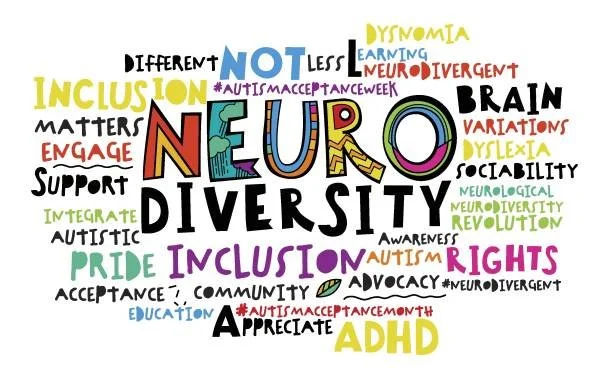
The term “neurodivergence” covers a huge range of identities and areas of difference, from Autism, Attention-Deficit Hyperactivity Disorder (ADHD), Rejection Sensitivity Dysphoria, Persistent Drive for Autonomy, Highly Sensitive Person (HSP), Giftedness, and more. Many argue that any form of diagnosed mental health condition qualifies someone as neurodivergent, because it diverges from the accepted norm, while others are more restrictive in their definition. The term neurodivergence has grown in use and popularity in recent years, and like all things that enter into the common sphere, can be appropriated and used in ways that are not consistent with the original meaning of the term. Some folks use the term neurodiversity, while leaving out the acceptance and inclusion aspects in their practice. So I wanted to make some things clear.
When I call myself a neurodiversity affirming practitioner, I mean that I expect , value, and treat as normal the many differences in thinking, perception, processing, relating and expression that show up across these many types of brains. When I am working with someone, I don’t intend to “fix” or “cure” them, because there is nothing wrong with them to begin with. “Normal” is just a myth. Rather, I hope to help my clients to feel like their best, most natural self, and meet whatever achievable goals they bring to the conversation. We may talk about sensory accommodations, self-advocacy, re-examining expectations, the many challenges of trying to “function” in society as it is, and valuing your own unique differences, among other topics.
I don’t think I can call myself an “expert” in the whole range of topics that fall under the neurodiversity paradigm. I have stronger knowledge and experience in some areas, and more limited knowledge and experience in others. But I really wanted to make sure that my prospective clients know that I’m not going to assume there is anything wrong with them because they have a brain that is different from some mythical norm. Hopefully I make that clear with this page!